When Expertise Expires: Rethinking How You Hire for a World Where Skills Have a Shelf Life
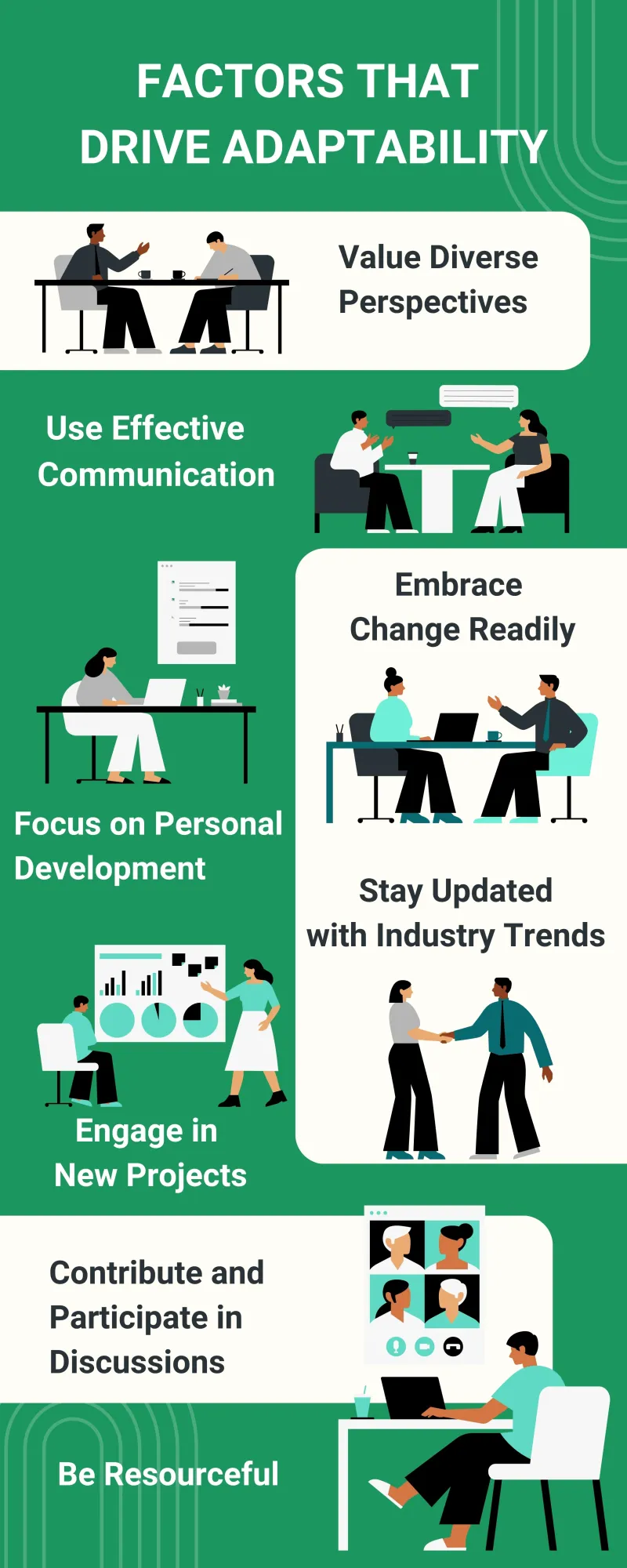
Photo: professional learning adaptability skill development workplace future, via www.trueprojectinsight.com
The Clock Is Already Running
There was a time when a seasoned professional's expertise represented a kind of permanent capital — something earned through years of deliberate practice and unlikely to depreciate. That era is over.
Research from the World Economic Forum has suggested that the half-life of a professional skill — the point at which roughly half of its practical value has eroded — has compressed dramatically over the past two decades. In certain technology-adjacent fields, that window has narrowed to fewer than five years. In some emerging disciplines, it may be closer to two. What this means for employers is not merely inconvenient. It is structurally disruptive.
Organizations that continue to hire primarily on the strength of demonstrated expertise are, in effect, acquiring yesterday's solution for tomorrow's problem. The candidate who spent the last decade mastering a particular platform, methodology, or technical framework may arrive highly credentialed and immediately behind.
This is not a criticism of those candidates. It is a diagnosis of the hiring model itself.
Why the Traditional Evaluation Framework Falls Short
Most structured interviews, technical assessments, and skills-based screening processes are designed to measure what a candidate currently knows. That makes intuitive sense — or it did when knowledge retained its value long enough to justify the investment of hiring around it.
But consider what that approach actually captures: a snapshot. A single frame pulled from a moving film. A candidate's current skill inventory tells you where they have been, not how quickly they can get to where you are going.
This distinction matters enormously in industries undergoing rapid transformation. In healthcare, the integration of AI-assisted diagnostics is reshaping clinical workflows faster than most credentialing bodies can respond. In financial services, regulatory technology is automating functions that once required specialized human judgment. In manufacturing, the convergence of robotics and predictive analytics is redefining what it means to be technically proficient on a production floor.
In each of these contexts, the most dangerous assumption a hiring manager can make is that a candidate's past expertise will remain sufficient.
The Neuroscience Behind Learning Speed
Understanding why some professionals adapt faster than others requires looking briefly at how the brain processes and integrates new information. Cognitive scientists have long recognized that adult learners vary significantly in what researchers call neuroplasticity — the brain's capacity to reorganize itself in response to new inputs.
But neuroplasticity is only part of the story. Equally important is what psychologists describe as a growth mindset: the internalized belief that intelligence and capability are not fixed quantities but expandable ones. Individuals who hold this orientation tend to approach novel challenges as learning opportunities rather than threats to their existing identity. They ask different questions, tolerate ambiguity more effectively, and demonstrate a measurable willingness to revise their assumptions.
For employers, this has a practical implication. The behaviors associated with high learning velocity — intellectual curiosity, comfort with iteration, willingness to seek feedback, and a documented history of self-directed skill acquisition — are observable. They can be surfaced through thoughtful interview design, behavioral assessments, and structured reference conversations. They are not, however, visible on a standard résumé.
What High-Velocity Learners Look Like in Practice
Across industries, the professionals who have demonstrated the greatest resilience to skill obsolescence share several identifiable characteristics.
They have typically crossed domain boundaries at least once in their careers — not because they failed in their original field, but because curiosity or opportunity pulled them toward unfamiliar territory. That transition, even when imperfect, represents evidence of adaptability under real conditions.
They maintain what might be described as a learning infrastructure: structured habits for consuming new information, professional networks that expose them to adjacent disciplines, and a practice of deliberate reflection on what they do not yet understand. In interviews, they speak fluently about what they are currently learning, not only what they already know.
They also tend to frame past roles in terms of problems solved rather than tasks performed — a subtle but meaningful distinction that reveals whether someone engaged with their work analytically or simply executed it.
Redesigning the Hiring Process Around Adaptability
For organizations serious about future-proofing their talent acquisition, several practical adjustments are worth considering.
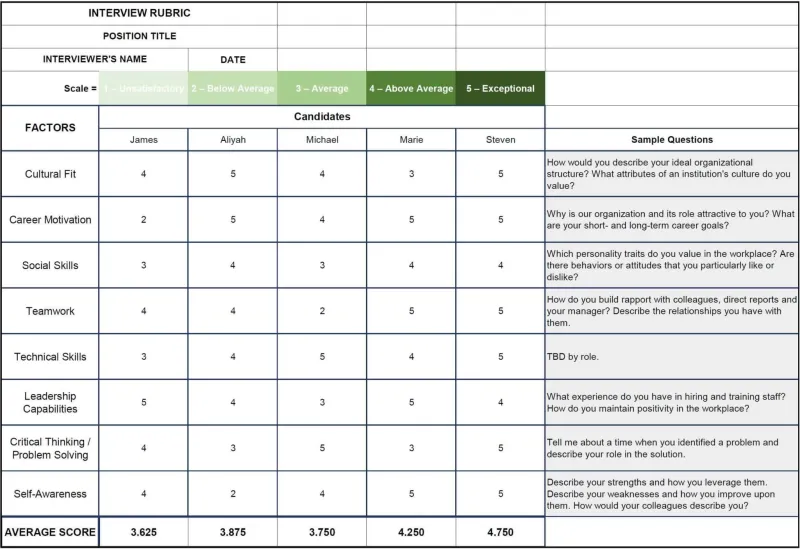
Reframe your competency models. Rather than anchoring job requirements exclusively to current tool proficiency or domain-specific credentials, identify the underlying cognitive and behavioral capabilities that enable someone to acquire new skills efficiently. Build those into your evaluation criteria alongside — or in some cases above — technical benchmarks.
Introduce learning simulations. Some forward-thinking employers have begun incorporating brief, structured exercises in which candidates are asked to engage with genuinely unfamiliar material and demonstrate how they approach it. The goal is not to assess whether they already know the content but to observe the quality of their inquiry, their tolerance for uncertainty, and the speed at which they begin to organize new information.
Rethink your reference conversations. Standard reference checks tend to confirm what a candidate has already told you. More useful questions probe for evidence of adaptability: How did this person respond when their approach stopped working? What did they do when the landscape shifted around them? Did they seek out new knowledge proactively or wait to be directed?
Weight trajectory over tenure. A candidate who has demonstrated consistent growth across a shorter career may represent a stronger long-term investment than one whose experience reflects depth in a domain that is actively contracting. Evaluating trajectory requires more interpretive effort, but the payoff in retention and sustained contribution is substantial.
The Organizational Dimension
It is worth noting that the challenge of skill obsolescence is not confined to individual candidates. Organizations themselves are subject to the same forces of acceleration. A company that hires for current proficiency and fails to invest in continuous development will find its workforce — however talented at the point of hire — progressively misaligned with market demands.
This means that the hiring conversation and the workforce development conversation cannot remain separate. Talent acquisition teams and learning and development functions need to operate from a shared framework — one that treats the capacity for growth as a core organizational asset, not an afterthought.
At BGHR Recruitment, we work with clients who are grappling with exactly this tension: the pressure to fill roles quickly with demonstrably qualified candidates, set against the longer-term imperative to build workforces that can evolve. The resolution, in our experience, lies not in choosing one priority over the other but in developing the evaluative sophistication to pursue both simultaneously.
A Final Word on What Durability Actually Looks Like
The most future-proof hire you can make today is not the candidate with the most impressive current credentials. It is the candidate who has demonstrated, through the arc of their career, that they know how to learn — and that they will keep doing so when the landscape shifts again.
In an economy where it will, and where the interval between shifts keeps shortening, that capacity is not a soft skill. It is the hardest skill there is.