Charm Is Not Competence: Rebuilding Interviews Around the Work Itself
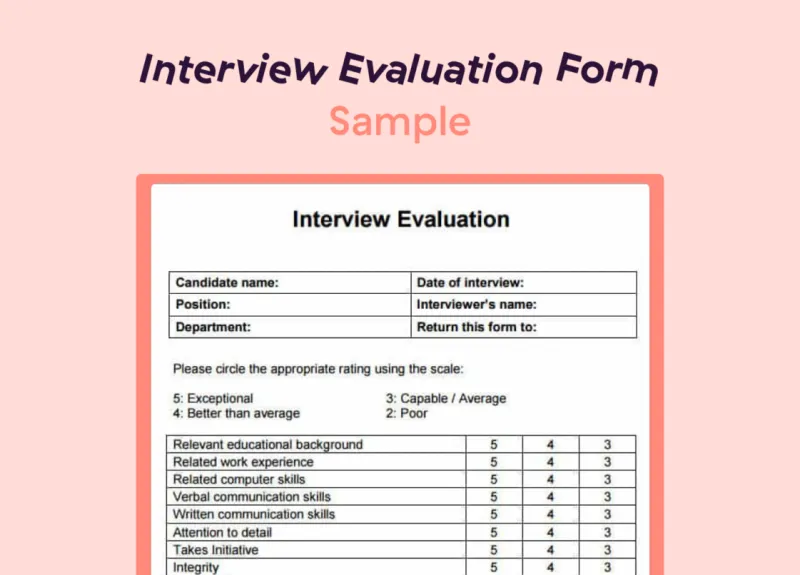
Photo: candidate completing work sample assessment at desk interview, via toggl.com
Somewhere in America this afternoon, a hiring manager will finish an interview, feel a warm glow about a candidate, and extend an offer based on nothing more durable than good conversation. Six months later, that manager will be documenting a performance problem and wondering where the signals were.
The signals were there. They were just measuring the wrong thing.
Why the Classic Interview Fails
The unstructured interview — free-flowing questions, gut-feel verdicts — has been studied for the better part of a century, and the findings are blunt. Its ability to predict actual job performance is weak, sometimes barely better than chance. Worse, it reliably rewards traits that have little to do with the work: verbal fluency, social confidence, physical attractiveness, and similarity to the interviewer.
In other words, the traditional interview is a talent contest for a skill called 'interviewing.' Charming candidates excel at it. Capable but reserved candidates — many of them excellent employees — get filtered out before lunch.
The remedy isn't more interviews. It's different evidence.
Start With the Job, Not the Questions
Most interview guides are assembled from borrowed question banks. A skills-based approach inverts the process: begin with a task analysis of the actual role, identify the four to six capabilities that distinguish strong performers, and design every assessment to elicit evidence of those capabilities.
For an operations analyst, that might mean interpreting a messy dataset. For a customer success lead, handling an angry-client scenario. For a project manager, triaging a schedule conflict. If the exercise doesn't map to something the person will genuinely do in the role, it doesn't belong in the process.
Tool One: The Work Sample
Nothing predicts job performance like a miniature version of the job. Work samples — a short, paid or take-home exercise reflecting real responsibilities — consistently rank among the strongest predictors in personnel selection research.
The design principles matter:
- Keep it under two hours of effort. Longer exercises silently exclude anyone with a current job, caregiving duties, or a life.
- Use realistic but sanitized materials. No confidential data, no free labor disguised as an assessment.
- Score it against criteria defined before you saw any submissions.
A marketing coordinator asked to draft a one-page campaign brief in ninety minutes gives you more signal than three rounds of 'tell me about a time' ever will.
Tool Two: Structured Scoring
When you do interview, structure is the difference between evidence and vibes. Structured interviews — identical questions, asked in the same order, scored against predefined anchored scales — dramatically outperform unstructured conversations in predictive validity.
The mechanics are unglamorous but effective. Before interviews begin, the panel agrees on the capabilities being assessed and what a '1' versus a '5' looks like for each. Every interviewer scores independently before any discussion happens, which prevents the senior person's opinion from anchoring the room. Behavioral questions ('walk me through a specific instance when...') replace hypotheticals, because past behavior under real constraints is harder to fabricate than intentions.
It feels less spontaneous. It is also, on the evidence, dramatically more accurate.
Tool Three: The Realistic Job Preview
Some hiring failures aren't capability failures — they're expectation failures. The new hire could do the work but didn't know what the work actually felt like, and left within a year.
Realistic job previews attack this directly. Shadow half a day with the team. Show the unglamorous parts alongside the appealing ones. Let candidates hear from a peer doing the job now, not just the enthusiastic hiring manager. Candidates who self-select out after an honest preview were going to leave anyway; you just saved everyone a year of churn.
A Practical Rollout
You don't need to rebuild everything at once. A reasonable first quarter looks like this: pick one high-volume role, define three core capabilities from a task analysis, add a single 90-minute work sample, convert the panel to structured scoring, and compare the quality of hires made under the new process against the old one after two quarters.
Most organizations that run this comparison don't go back.
The Cultural Shift
The hardest part isn't the methodology — it's persuading hiring managers to give up the confidence of gut feel. The counterargument to offer them is self-interest: structured, work-based assessment protects their own track record. Fewer mis-hires mean fewer difficult conversations, less rehiring, and teams that actually perform.
Charm is pleasant. Competence pays the bills. Hire for the second, and the first will follow from people who finally feel like they're being judged on what they can do.